
The relentless pursuit of higher frequency, efficiency, and reliability in microwave systems drives the continuous innovation within the semiconductor industry. Among the key enablers of modern radar, electronic warfare (EW), and communications infrastructure are Gallium Arsenide (GaAs) Monolithic Microwave Integrated Circuits (MMICs). The HMC264, a GaAs pHEMT distributed power amplifier, stands out as a quintessential component, engineered to deliver exceptional performance across a broad spectrum of demanding applications. This analysis delves into the core capabilities that make the HMC264 a preferred choice for system designers.
At the heart of the HMC264's prowess is its **exceptional broadband performance**. Designed to operate from 2 GHz to 20 GHz, the amplifier provides a single, compact solution that covers multiple octaves. This wide bandwidth is critical for systems requiring frequency agility, such as threat detection systems that must sweep across a wide range to identify potential risks or multi-band communication links that need to switch frequencies dynamically. The amplifier's flat gain response across this band ensures signal integrity, minimizing the need for complex equalization circuits.
Complementing its bandwidth is its **remarkable output power and linearity**. The HMC264 is capable of delivering up to +27 dBm of saturated output power, a critical factor for extending the range and improving the signal-to-noise ratio of any system. More importantly, it maintains a high third-order intercept point (OIP3), which is a direct measure of its linearity. High linearity is non-negotiable in systems employing complex modulation schemes (e.g., QAM, OFDM), as it preserves the modulation accuracy (EVM) and minimizes spectral regrowth and adjacent channel interference. This makes the amplifier indispensable for modern, high-data-rate links and sensitive receiver chains.
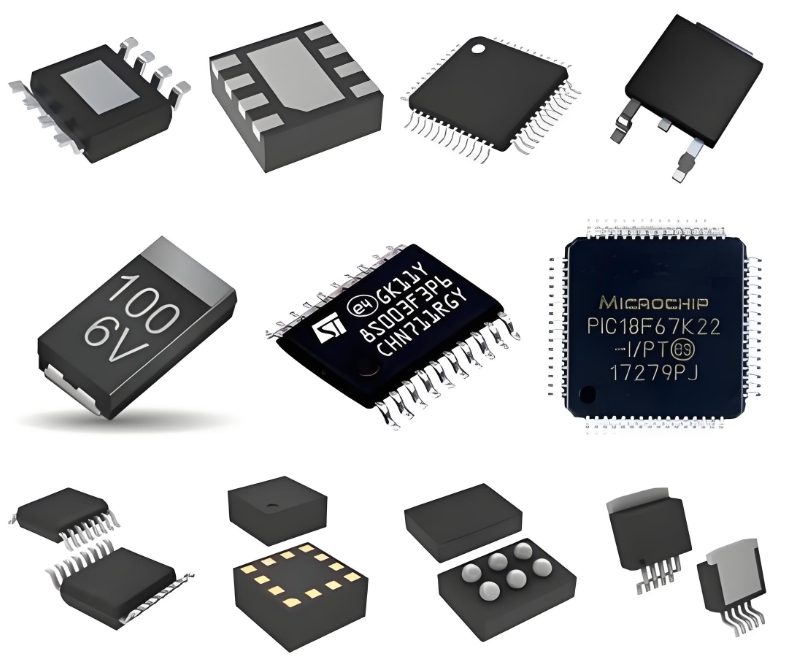
Furthermore, the HMC264 is architected for **superior integration and reliability**. Housed in a miniature, RoHS-compliant 4x4 mm SMT package, it is designed for high-volume manufacturing using standard surface-mount techniques. This small form factor allows designers to achieve high functional density on a printed circuit board (PCB), which is paramount for airborne and portable systems where space and weight are constrained resources. The use of a robust GaAs pHEMT process ensures high reliability and performance consistency under varying environmental conditions, a necessity for aerospace and defense applications.
The versatility of the HMC264 is demonstrated through its deployment across diverse domains. In **phased array radar systems**, it serves as a crucial gain block in transmit/receive modules, providing the necessary power to drive antenna elements. In **electronic warfare suites**, its broadband nature allows jamming systems to cover a wide threat spectrum effectively. For **test and measurement equipment**, it acts as a general-purpose driver amplifier, enhancing the signal strength of vector network analyzers and signal generators without distorting the waveform.
ICGOODFIND: The HMC264 solidifies its position as a critical high-performance MMIC amplifier by mastering the trifecta of microwave design: wide instantaneous bandwidth, high power with excellent linearity, and robust, integrable packaging. It effectively eliminates the traditional design trade-offs between bandwidth, power, and size, enabling a new generation of compact and highly capable microwave systems for the most challenging applications.
**Keywords:** Broadband Amplifier, Microwave Systems, GaAs pHEMT MMIC, High Linearity, Output Power.

