
NXP 74HC139PW: A Comprehensive Technical Overview of the Dual 2-to-4 Line Decoder/Demultiplexer IC
The NXP 74HC139PW is a high-speed, dual 2-to-4 line decoder/demultiplexer integrated circuit (IC) from the renowned 74HC family. Fabricated with advanced silicon-gate CMOS technology, it is engineered for high noise immunity and low power consumption, making it a cornerstone component in a vast array of digital systems. This IC effectively translates a binary input code into a mutually exclusive active-low output, serving two primary functions: decoding address information in memory systems and routing data signals from a single source to one of several destinations (demultiplexing).
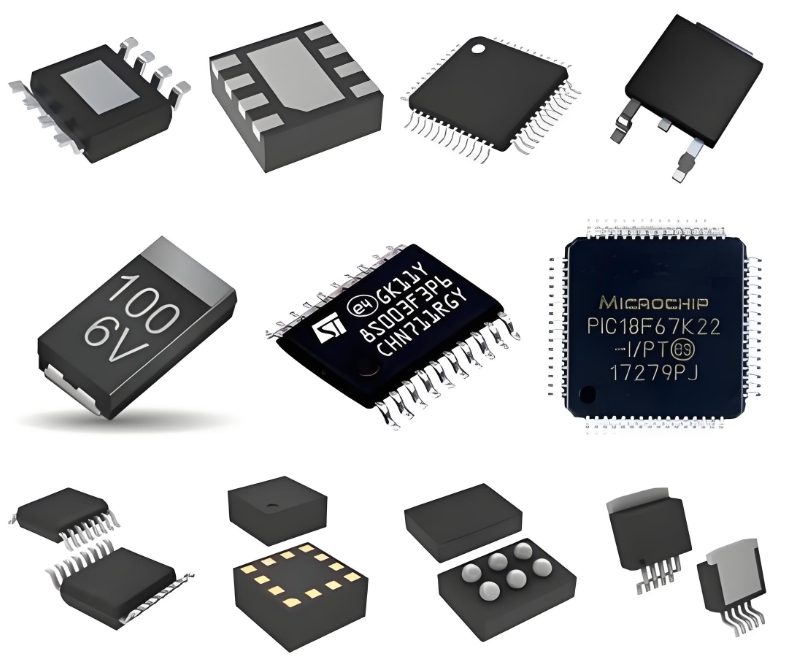
Housed in a TSSOP-16 (Thin Shrink Small Outline Package) designated by the "PW" suffix, this package is designed for space-constrained applications. The "dual" feature signifies that the package contains two independent decoders, each equipped with two select inputs (A0 and A1), an active-low enable input (E), and four active-low outputs (Y0 to Y3). This configuration provides significant design flexibility and component density.
The core functionality of each decoder is governed by a simple truth table. When the enable pin (E) is held high (logic 1), the decoder is disabled, and all its outputs remain high regardless of the state of the select inputs. Operation is enabled only when the E input is held low (logic 0). In this active state, the binary number applied to the two select inputs (A0 and A1) determines which of the four outputs is asserted low. For example, an input of A1=0 and A0=0 will cause output Y0 to go low while Y1, Y2, and Y3 remain high. This one-of-four decoding is fundamental to selecting memory chips, peripherals, or other system components.
As a demultiplexer, the function is similar. The enable pin (E) is repurposed as the data input line. The select inputs then choose which of the four output channels will carry the inverted version of this data signal. This allows a single data stream to be distributed to one of four different paths, a crucial function in data routing and communication systems.
A key advantage of the 74HC139PW is its high-speed operation with low power dissipation, a characteristic of the HC (High-speed CMOS) logic family. It can operate over a wide voltage range, typically from 2.0 to 6.0 V, allowing for compatibility with various microcontrollers and digital logic levels. Furthermore, it offers high output current, enabling it to drive multiple inputs or LEDs directly.
ICGOODFIND: The NXP 74HC139PW stands out as an exceptionally versatile and reliable solution for address decoding and data distribution tasks. Its dual-channel design maximizes functionality within a minimal footprint, while its robust CMOS construction ensures efficient performance across consumer electronics, industrial automation, and telecommunications equipment. It remains a fundamental and highly recommended IC for digital designers seeking a proven decoding and demultiplexing solution.
Keywords: Decoder/Demultiplexer, Active-Low Outputs, Address Decoding, CMOS Technology, TSSOP-16 Package.

